
Befriending the mountains
On more conversations with mountains, plants and cows

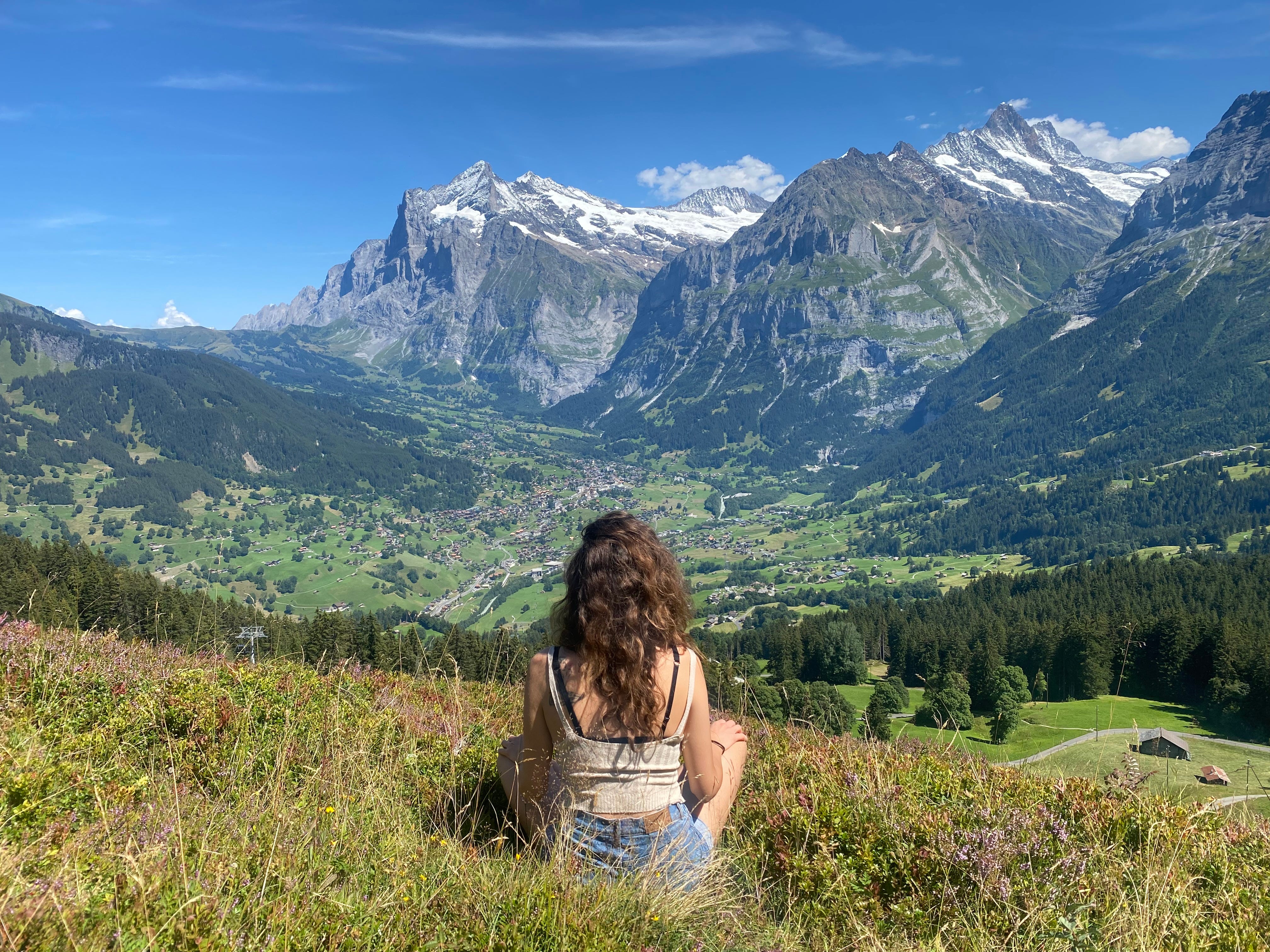
The Swiss Alps and I are attempting to warm up to each other. The breathtaking landscapes literally take my breath away. Being an Aquarius—an air zodiac sign—I cherish personal freedom and independence while rejecting any sense of restriction or constraint.
Open spaces nurture my feeling of freedom and expansiveness. However, the mountain scenery triggers in me a sensation of narrowness. It might not be rational, but it feels similar to when I dived in Thailand; unlike others, for whom the endless underwater world embodies liberation, the potential limitations of movement make me nervous.
Perhaps it is the clouds hanging so low in the sky, seemingly close enough to touch them. When I stand in the Chilean and Peruvian Andes, I feel deeply rooted in the vastness of the landscape - why does it feel different here?
It is true: the intense colors of Switzerland, with its green lawns and pink flowers hanging from every window, are mesmerizing - almost even too perfect.
Is it this perfection that bothers me? Am I yearning for the edginess, the unconventional, the wilderness, or the water?
I find myself drawn to the 20-kilometer-long river flowing through Grindelwald. The Schwarze Lütschine originates in the upper glacier and flows into the valley. Still, it does not satisfy what I am looking for. While not entirely sure what that is, whenever I have a free day, my instincts bring me down to the sparkling turquoise lakes of Interlaken—a town nestled in a valley between Lake Thun and Lake Brienz with their most impressive lakesides.
As a pivotal point for trains and activities in the Jungfrau region, the famous tourist town brims with chocolate and watches. Next to the ferry terminal by the railway station, a small café enchants my heart. Riverside view. Affordable oat milk coffee. Charming interior. Welcoming atmosphere. Almost like finding a piece of home.
Another discovery is Istelwald - the only village on the left shore of the lake, also called the Pearl of Lake Brienz, which persuades with its charming, water-side cafés and food locations.
Observing families, friends, and couples amusing in the crystal-cold water and picnicking on the grassy shore lightens my chest and opens my heart.
At the end of Istelwald's road hides, in a secluded cove, a cozy Strandbad and Camping site. Here, with the water in between, the snow-peaked mountains recede into the background, creating a harmonious balance of nature. A girl sits among her girlfriends and sketches the postcard-worthy scenery with watercolors. The joy of summer fills my body, and for a moment, this little spot on earth feels like the perfect place to live.
A thought crosses my head about the absurdity of perspective - how a beautiful hot summer day to me concurrently is an alarming reminder of the climate crisis as record heatwaves are hitting Europe this summer - I brush it away, indulging in the joy of the moment.
Swimming in the freshwater while watching the majestic mountains, I realize the lakes awake a feeling of familiarity. They soothe all the overwhelming new and comfort me in times of change.
What I love about living in different places in the world is the expansion of our reality bubbles, interacting with people viewing the world differently than you, and having conversations that question our own perspectives and values as the obvious.
But even the bravest among us, accustomed to constant change, long for moments of stability and comfort. I have grown comfortable listening to the stories of the sea and lakes, but the mountains are strangers to me.
It is now up to me to decide what kind of relationship I want to build with them and ask myself if I am as open-minded as I always thought.
Although my initial motivation in coming here was financial, can I expand the spectrum of my reasons for being here? What if I viewed the mountain's imposing presence as an invitation to explore and befriend them? To see it as an opportunity for me, as they are willing to share their wisdom with me.
The night after the lake visit, I watch the sunset dance of red lights on the Eiger Peak from my balcony. In silence, I zip on my glass of wine and begin to listen to the whispering tales of the mountains.
I discover my neighbor is an infamous North Face and movie protagonist known as the Wall of Death, as over 60 people lost their lives attempting to climb it. The stories of the mountain-human relationship are fascinating, and quickly we expand our dialog.
The Eiger has been a firsthand witness to the changing climate. In the last 20 years, Switzerland's glaciers have lost a third of their volume, and their melting is increasing rapidly - only since 2021, the glaciers have lost 36%.
Honestly, I never spent much reflection on the role of mountains in the ecosystem before - the glaciers are protectors of the valleys and sacred creators of rivers, which serve as a prime resource of life's elixir: water.
Melting glaciers will lead to water shortages, affecting agriculture, drinking water, and energy supply. The glaciers function as stabilizers of the mountain masses, and their decline means an increased risk of natural catastrophes, such as landslides, rockfalls, and Glacial Lake Outburst Floods.
This year's news headlines report about the missing snow in the Swiss Alps, an area heavily relying on the tourism industry, especially for its winter sports businesses. However, solutions such as bringing in tons of fake snow might create new, unpredictable consequences.
And most importantly, they will disconnect us even more from nature.
As technological solutions arise, it is crucial to simultaneously return to our grounding and facilitate Nature-based solutions to protect and restore ecosystems while addressing global challenges.
Recent news of devastating floods in Slovenia and the fire in Maui not only break our hearts but reveal the gravity of the situation, but it is never too late to learn from our past mistakes and rewrite the stories of the future.
As a hospitality worker in the tourism field, I see a significant responsibility on tourism businesses in shaping a new way of hosting and traveling - a kind of travel not only centering on the well-being of a few humans but a mindset that begins to understand nature as our mentor and as a reciprocal interconnected relationship.
I keep saying it: transformative change begins within ourselves. And with time, we gain enough power and tools to express it to the outside.
For me to create a healthy future within the travel and hospitality industry means expanding my relationship with nature is a vital step. In other words, to have more conversations - not only with the mountains - but with trees, plants, and cows.
In the face of the climate crisis, the increasing gap between poor and rich, the rise of the right-wing, and an extremely polarized and agitated society, I am finding solace in nature as our wisest teacher for treasured lessons in nature's principles of interdependence and collaboration, resilience, and diversity, respect and balance, adaptation and renewal - both on an individual level and as a cohesive society.
For further lessons, I am reading Braiding Sweetgrass, recommended to me by a wonderful friend. Robin Wall Kimmerer brilliantly blends her scientific expertise as a botanic with her indigenous knowledge, highlighting the complementary relationship between indigenous knowledge and Western science. And the award-winning short film Why I Hike by Nikola Horvat leaves me inspired for the many reasons people fall in love with hiking.
Since that first conversation with the Eiger, a new friendship is sprouting. At night, when I walk home in a calming silence after work, I feel the presence of the dark giant shape next to me, and I feel safe, and who knows, perhaps even a love story awaits.
With love,
Zaza